
Big Island / Hawaii
Hawaii's strongest golf cluster: Mauna Kea's ocean-carry icon, Mauna Lani's lava-and-coast routing, Hualalai luxury, and enough resort depth to justify more than one round
The take
The Big Island is the best golf decision in Hawaii when the group cares about course concentration, resort quality, and lower logistical friction. The Kohala Coast puts Mauna Kea, Hapuna, Mauna Lani North and South, Hualalai, and Waikoloa within a manageable resort corridor. You are not island-hopping. You are choosing a base and moving along the coast.
Mauna Kea is the historic anchor, opened in 1964 by Robert Trent Jones Sr. on black lava at Kauna'oa Bay, and now sharpened by a Robert Trent Jones Jr. renovation that added Platinum Paspalum and refreshed the course's playing surfaces. Mauna Lani South gives you the famous coastal par 3s and lava-rock routing. Hualalai is a Jack Nicklaus luxury play tied to Four Seasons access. Hapuna and Mauna Lani North are useful support rounds. Waikoloa is the more public/value-oriented piece.
Read the full take
The right version is a premium resort trip with golf as the spine, not a bargain chase. The wrong version stays far from the Kohala Coast to save on lodging, then spends the trip driving through lava fields wondering why the savings feel so tiring. This is the Hawaii trip for groups that want lava, ocean, trade winds, snorkeling, Kona coffee, and a real golf cluster. It is not the Hawaii trip for people trying to win a spreadsheet.
Best version
Luxury golf trips, Couples and mixed golf/non-golf groups, West Coast travelers who want winter sun, Golfers who want Hawaii scenery without island-hopping, Groups that want resort comfort, beaches, pools, and ocean-view golf
Skip if
- Budget-only buddies trips
- Groups that want nightlife or city energy
- Players trying to maximize rounds per dollar
- Anyone unwilling to accept resort pricing
Insider notes
- Luxury golf trips
- Couples and mixed golf/non-golf groups
- West Coast travelers who want winter sun
- Golfers who want Hawaii scenery without island-hopping
- Groups that want resort comfort, beaches, pools, and ocean-view golf
The courses
6 core rounds. Scan first, then click into the course detail when you want the full read.
Full destination course detailsExpand this section for the deeper course reads, then click again to hide it.ExpandClose
Must play
Mauna Kea Golf Course
- Designer
- Robert Trent Jones Sr. / Robert Trent Jones Jr. renovation
- Year
- 1964 / renovated 2024
- Par
- 72
- Yardage
- 7,370
- Difficulty
- Medium-high
- Green fees
- Premium resort/public-access rate; confirm current Mauna Kea Resort pricing and seasonal aeration dates.
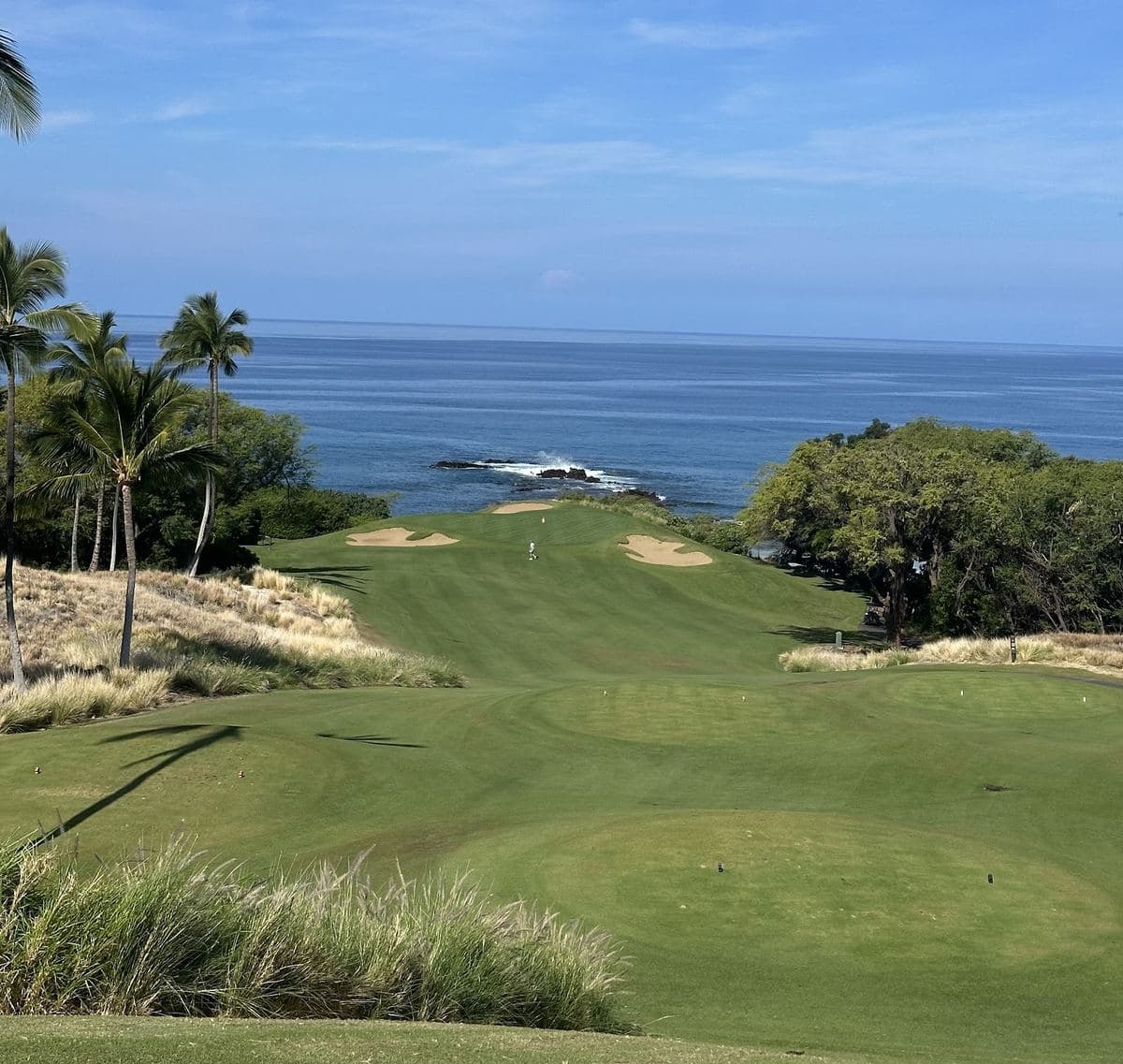
Mauna Kea is the round people remember before they remember the score. The third hole is famous for a reason, but the course is more than one carry over the Pacific. The renovation matters: firmer, cleaner surfaces make the old Rockefeller-era idea feel current again. It is the Big Island anchor, and it should be the first course you protect.
Strengths
- Historic RTJ pedigree
- Iconic 3rd hole
- Renovated Platinum Paspalum surfaces
- Ocean/lava setting
- Strong resort identity
Weaknesses
- Expensive
- A few holes carry more fame than strategy
- Wind can turn club selection into comedy
Must play
Signature holes: 3, 11, 13, 18
Hapuna Beach Prince Hotel, 62-100 Kaunaʻoa Dr, Waimea, HI 96743, USA
(808) 880-3000
Strong play
Hapuna Golf Course
- Designer
- Arnold Palmer and Ed Seay
- Year
- 1992
- Par
- 72
- Yardage
- 6,875
- Difficulty
- Medium
- Green fees
- Resort/public-access rate; usually below Mauna Kea but still premium Hawaii pricing.
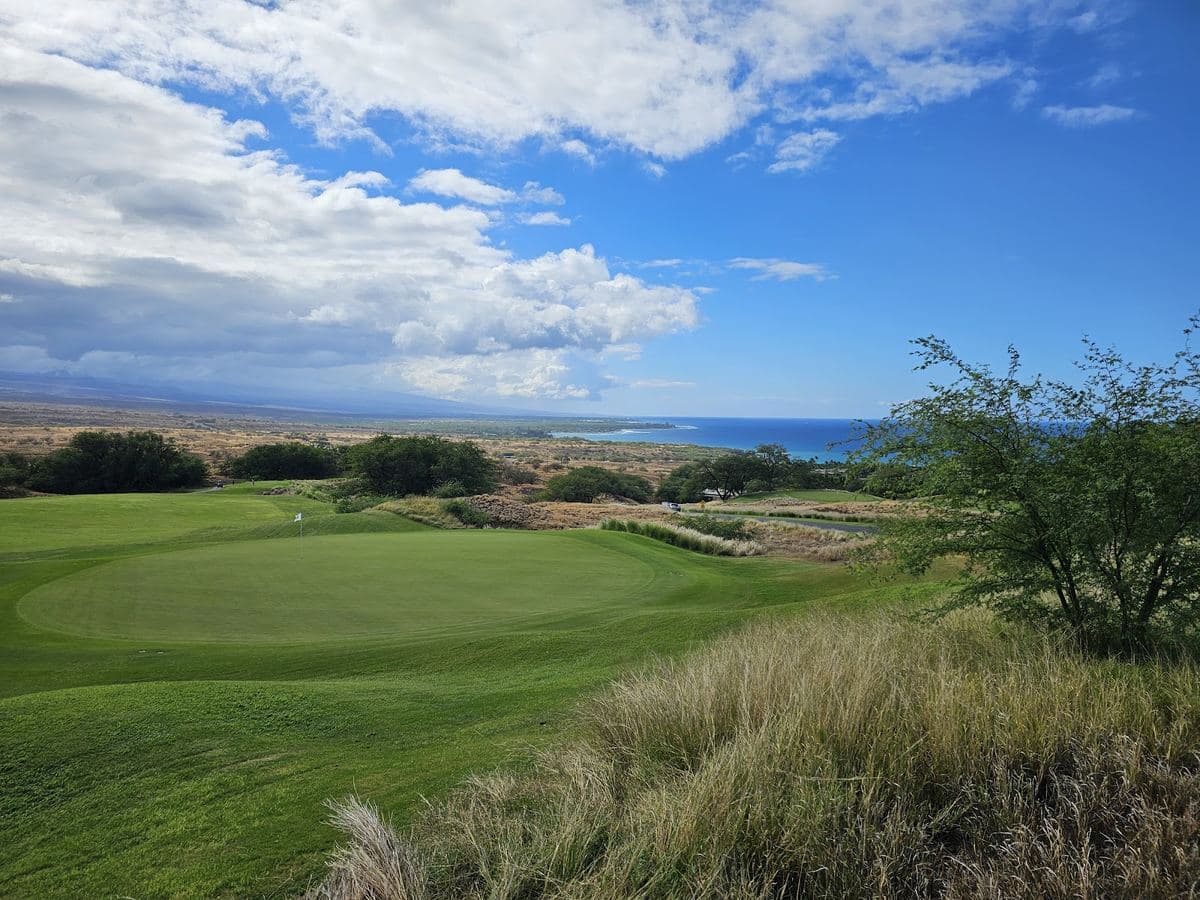
Hapuna is the sensible second course in the Mauna Kea orbit. It is not the headline, but it makes the resort stay feel like a golf trip rather than a one-round postcard.
Strengths
- Big views
- Resort convenience
- Playable layout
- Useful pairing with Mauna Kea
Weaknesses
- Less iconic
- Less oceanfront intensity
- Can feel secondary
Strong supporting play
Signature holes: 3, 7, 12, 18
Must play
Mauna Lani South Course
- Designer
- Homer Flint / Robin Nelson and Rodney Wright work
- Year
- 1981
- Par
- 72
- Yardage
- 6,938
- Difficulty
- Medium-high
- Green fees
- Premium resort/public rate; confirm current Mauna Lani pricing.
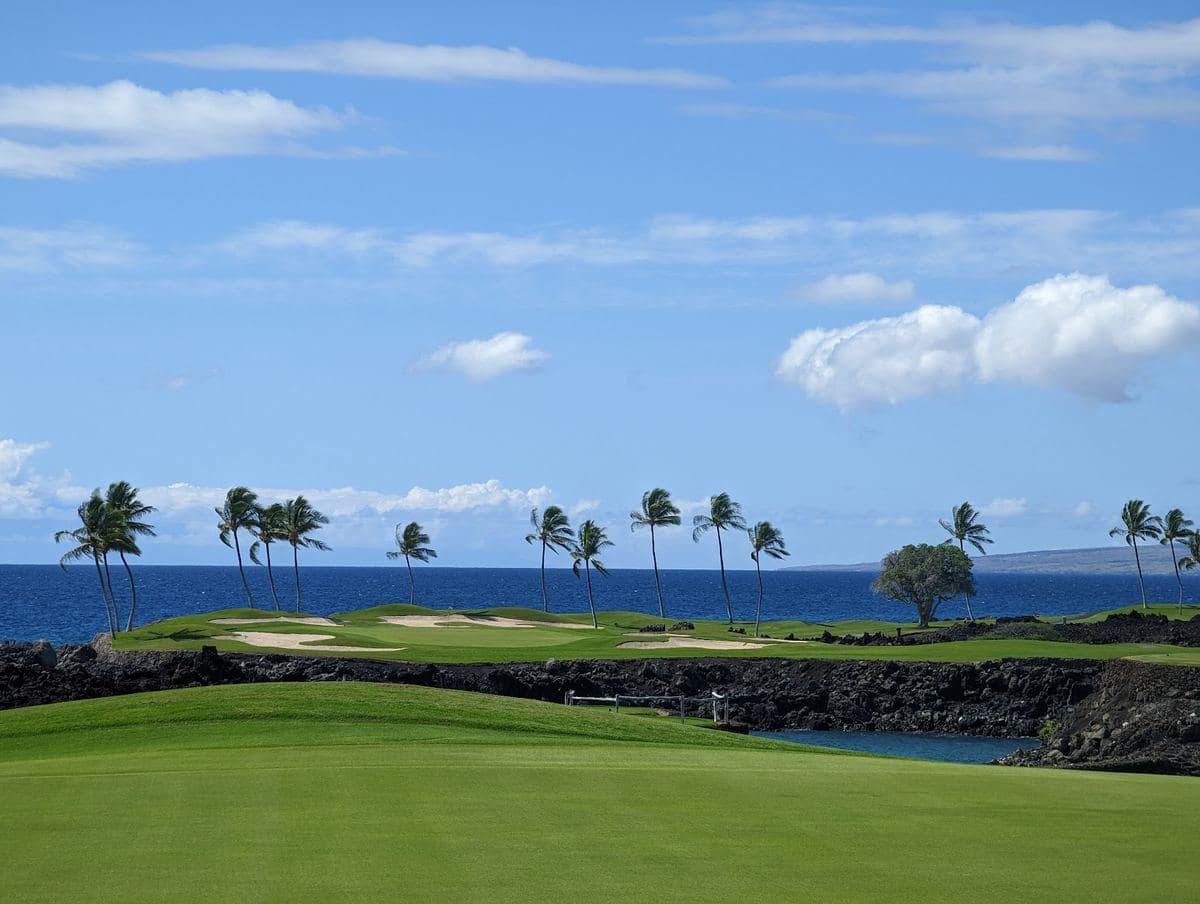
Mauna Lani South is the other Big Island must-play for most groups. The 13th and 15th are the postcard moments, but the better reason to play it is the full lava-and-coast rhythm. It gives the trip coastal drama without requiring you to leave the Kohala Coast.
Strengths
- Famous over-water/coastal holes
- Lava-rock setting
- Resort polish
- Good vacation fit
Weaknesses
- Premium cost
- Not every hole has the same drama
- Wind matters
Must play
Signature holes: 7, 13, 15, 18
Strong play
Mauna Lani North Course
- Designer
- Homer Flint / Robin Nelson and Rodney Wright work
- Year
- 1989
- Par
- 72
- Yardage
- 6,913
- Difficulty
- Medium
- Green fees
- Premium resort/public rate; confirm current Mauna Lani pricing.
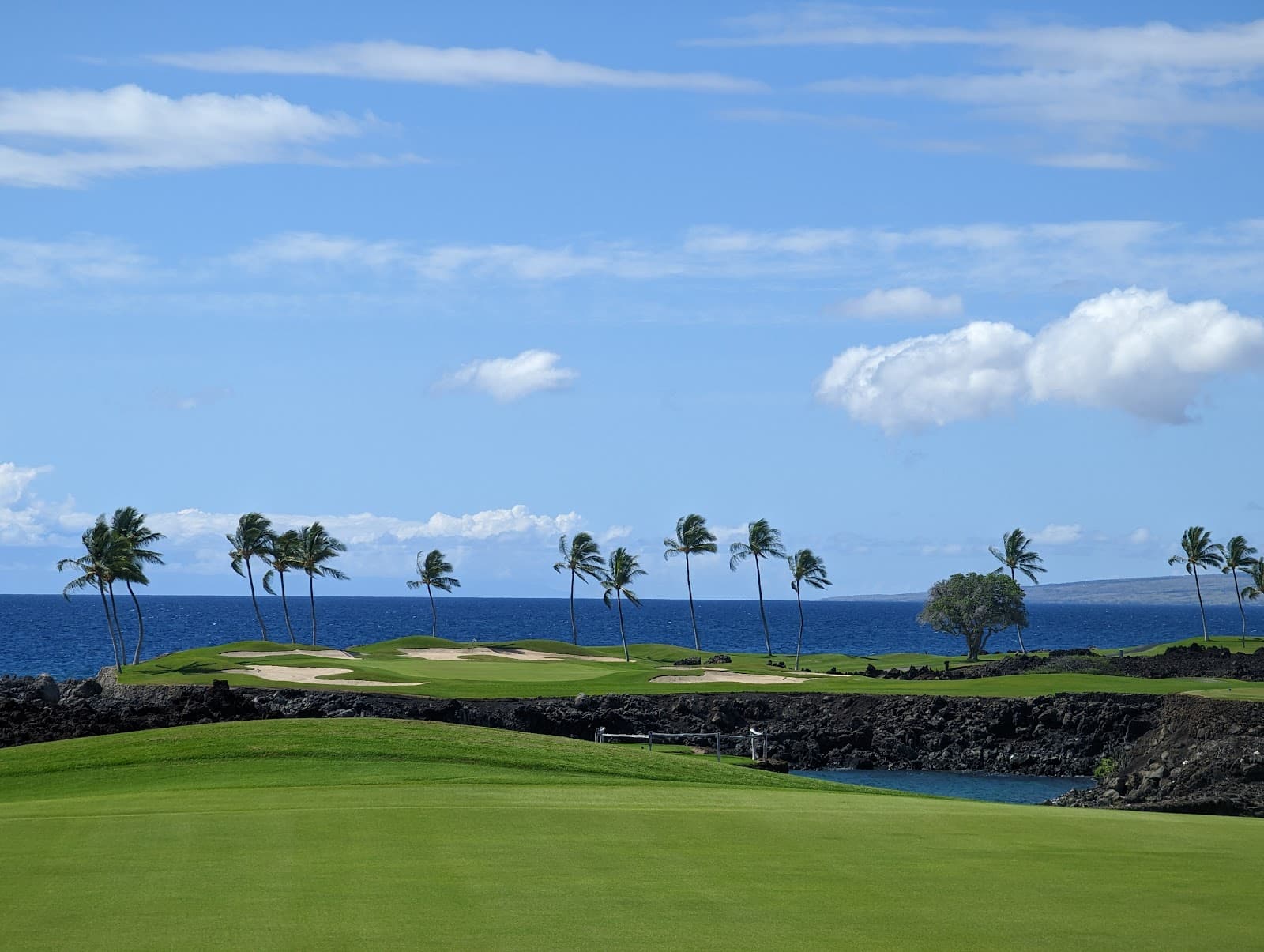
North is the quieter Mauna Lani round. That is useful on a Hawaii trip where not every golf day needs to be a cinematic event.
Strengths
- Playable
- Resort convenient
- Good contrast to South
- Visually interesting lava setting
Weaknesses
- Less iconic
- Less coastal drama
- Not a standalone reason to travel
Strong supporting play
Signature holes: 4, 9, 11, 17
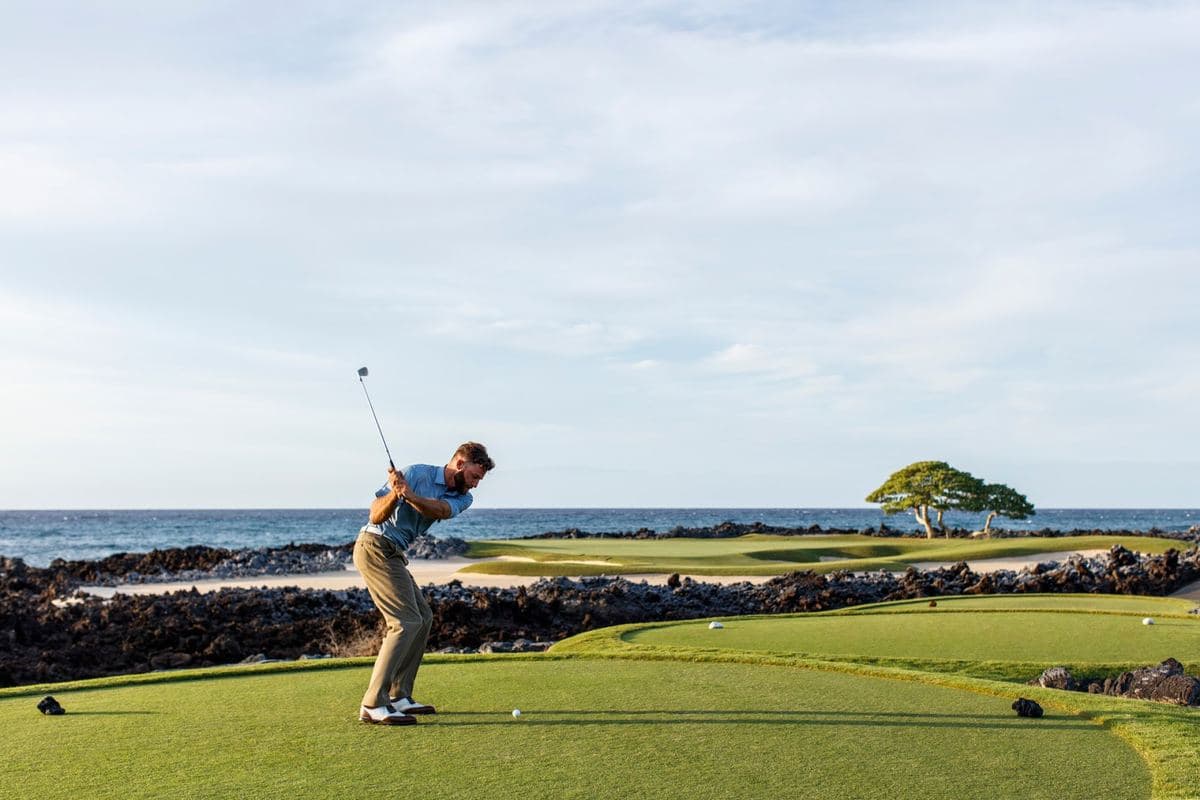
Must play
Hualalai Golf Course
- Designer
- Jack Nicklaus
- Year
- 1996
- Par
- 72
- Yardage
- 7,100
- Difficulty
- Medium-high
- Green fees
- Four Seasons Hualalai guest-access rate; confirm availability, aeration, and closure dates before planning around it.
Hualalai is the luxury play. If the group is staying Four Seasons, it belongs at the center of the trip. If not, do not assume you can just slide it into the tee sheet. The final holes returning toward the ocean are exactly why people pay Four Seasons money and then pretend the golf was the practical part.
Strengths
- Nicklaus design
- Champions Tour identity
- Luxury service
- Black-lava/ocean finish
- Impeccable resort feel
Weaknesses
- Access-restricted
- Expensive
- Not practical for every Big Island itinerary
Must play if access works
Signature holes: 7, 12, 17, 18
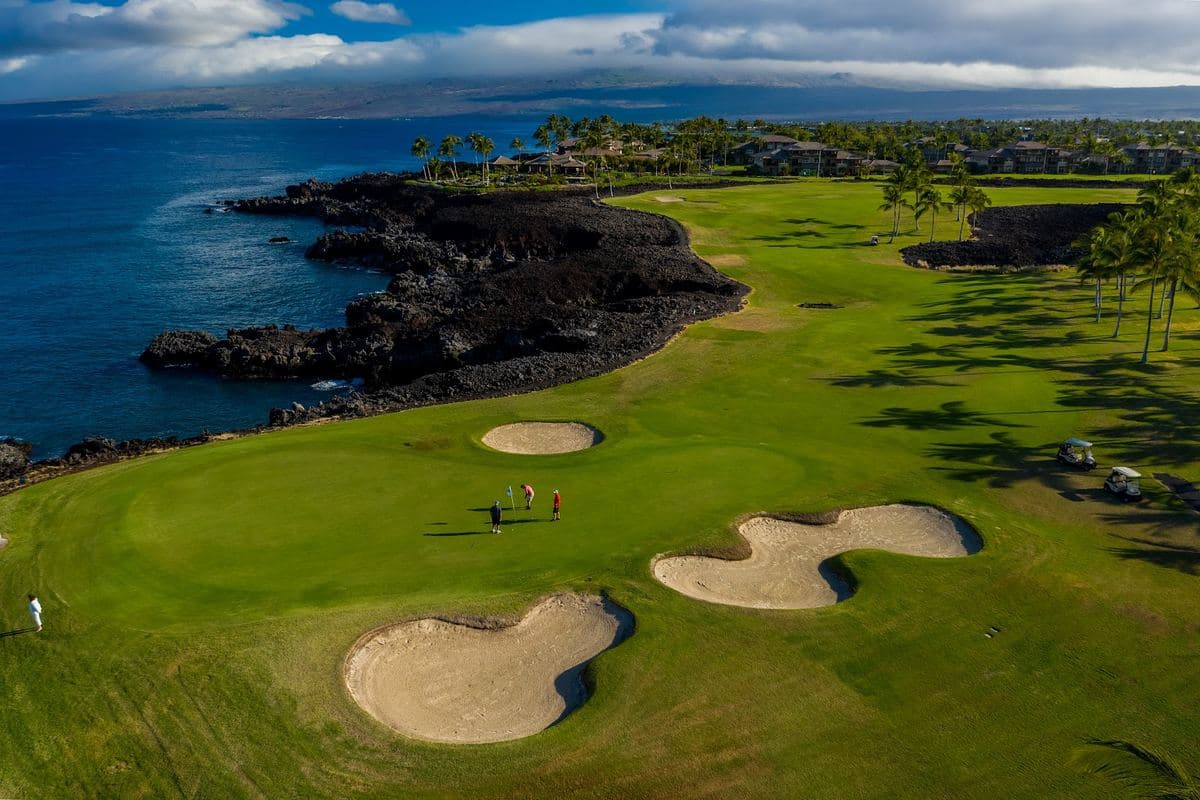
Strong play
Waikoloa Beach Resort Kings' / Beach Golf
- Designer
- Tom Weiskopf and Jay Morrish / Robert Trent Jones Jr.
- Year
- 1990 / 1981
- Par
- 72
- Yardage
- 7,074
- Difficulty
- Medium
- Green fees
- Public/resort rate; generally more accessible than the top luxury anchors.
Waikoloa is the utility piece. Kings' is the more architecture-literate choice; Beach is the easier resort round. Either can make the trip more affordable and flexible, but neither should displace the Big Island anchors unless budget demands it.
Strengths
- More accessible
- Useful location
- Good extra-round fit
- Lower pressure
Weaknesses
- Not as premium as Mauna Kea/Mauna Lani/Hualalai
- Course operations have changed over time
Depth play
Signature holes: 5, 7, 12, 18
Where to stay, eat, and stray
Lodging
Where to stay
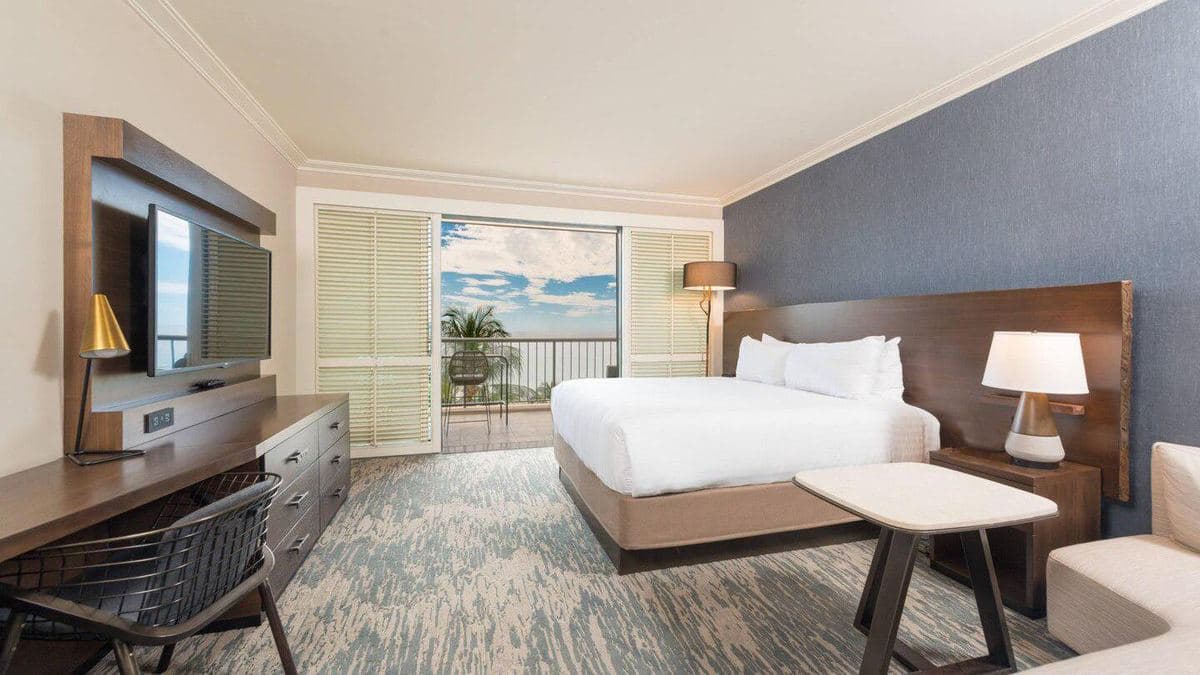
Mauna Kea Beach Hotel / The Westin Hapuna Beach Resort
This is the classic Big Island golf base. If Mauna Kea is the emotional anchor, start here. Mauna Kea Beach Hotel is the heritage play; Westin Hapuna is the more practical group-inventory play with the same resort orbit.
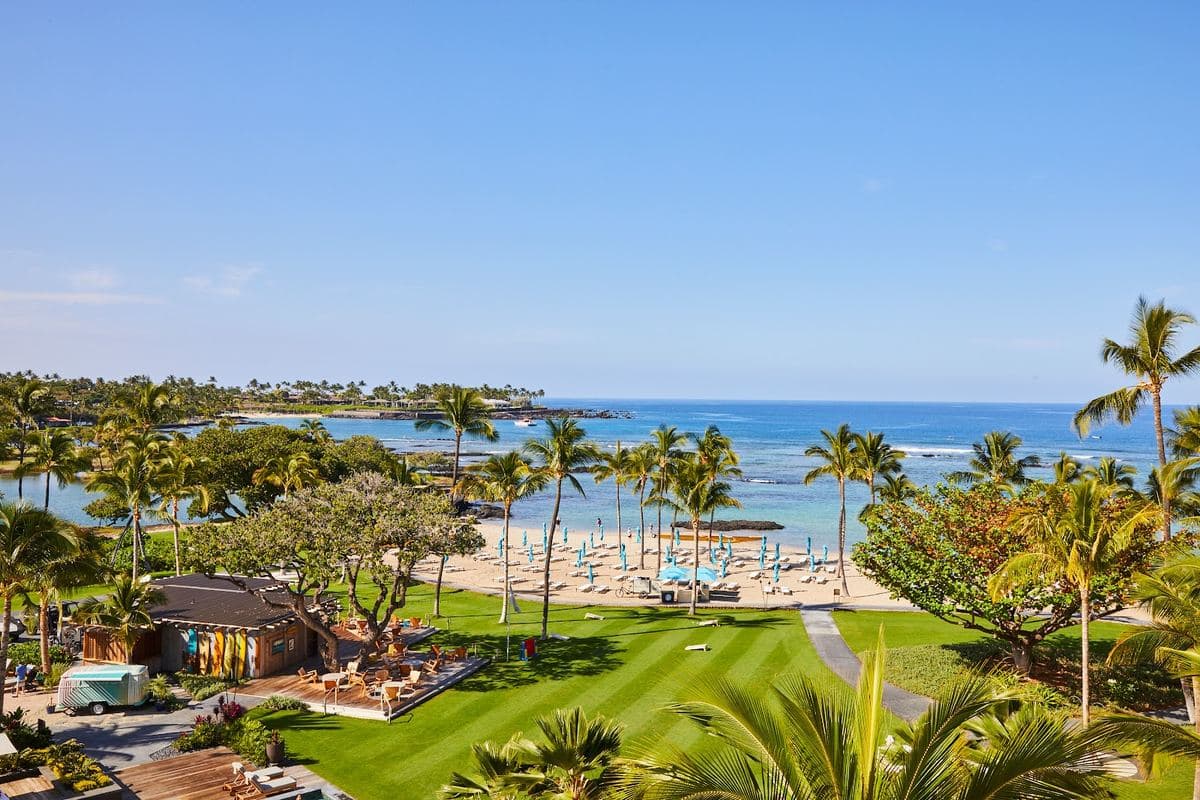
Mauna Lani, Auberge Resorts Collection
Mauna Lani is the refined answer. It works beautifully for couples and high-end groups that want the resort to be as important as the golf.
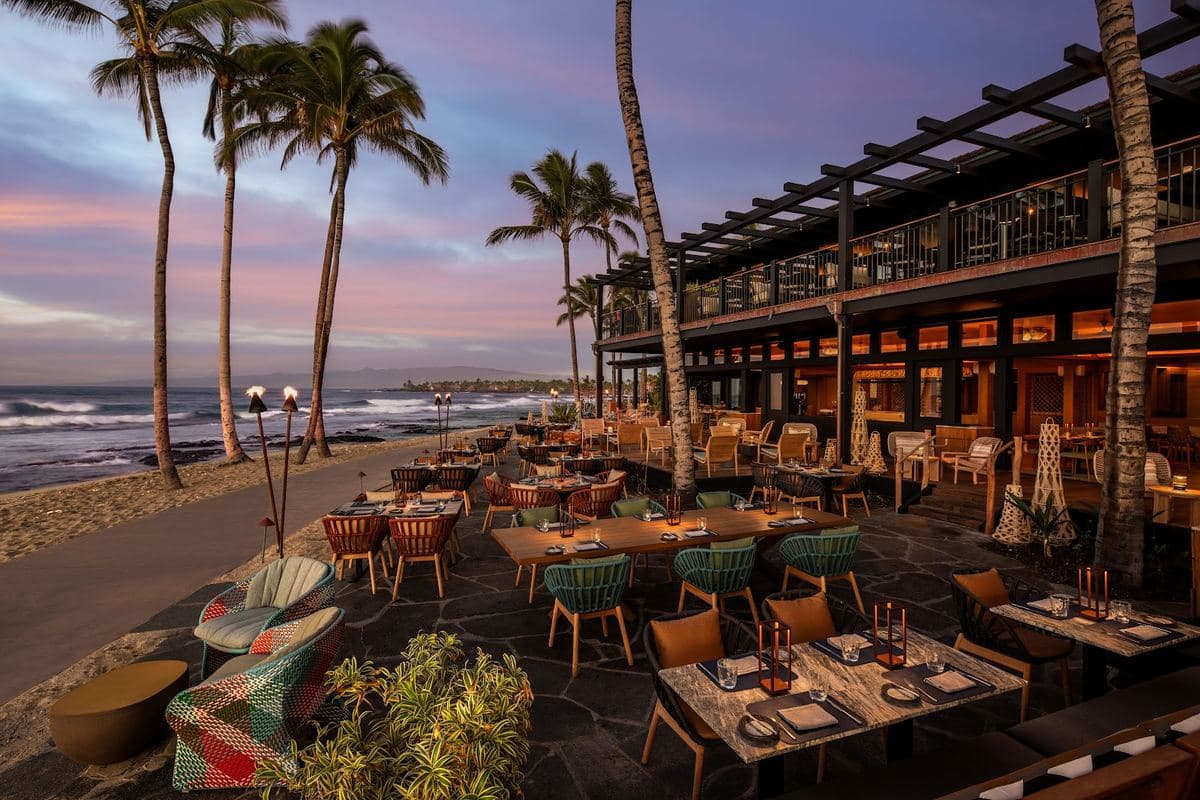
Four Seasons Resort Hualalai
Four Seasons is the splurge. It is worth it if the group wants the full luxury experience. Wasteful if the group only cares about tee times and beer.
Dining
Where groups actually eat
Manta at Mauna Kea
Use it when Mauna Kea is the base. This is exactly what resort dining is supposed to do.
CanoeHouse at Mauna Lani
This is the Big Island dinner with the most obvious "yes, this is why we came" energy.
Beach Tree / Ulu at Four Seasons Hualalai
If you are staying Hualalai, eat like you are staying Hualalai. If you are not, do not force the drive just to prove a point.
Things to do
Beyond the golf
Beaches and resort pools
Core part of the trip. This is why non-golfers can be happy here.
Hawaii Volcanoes National Park
Worth it on a longer trip, but it is a major drive from the Kohala Coast. Do not treat it like an afternoon errand.
Mauna Kea stargazing
Memorable, but altitude and timing matter. Plan it intentionally, and do not schedule it after 36 holes unless the group enjoys falling asleep in one of the best stargazing settings on earth.
Planning mechanics
Logistics
Flights, driving, walking
Flights
Kona International Airport (KOA): the airport for Kohala Coast golf, roughly 25-45 minutes depending on resort. Hilo (ITO): usually not ideal for this golf trip unless pairing with Volcanoes or east-side travel. Private aviation: Kona supports private arrivals; coordinate handling and ground transport. Kona is the answer. Inter-island add-ons sound fun until they become luggage, rental cars, and a lost golf day.
Ground transportation
Rent cars or arrange resort transport. If playing multiple resorts, do not assume shuttles solve it.
Weather
When the trip works best
Best window
Year-round, with winter/holiday premium demand
Dry-side advantage
Kohala Coast is one of Hawaii's better golf-weather zones
Wind
Afternoon wind can matter
Planning ranges
Cost and value levers
Anchor golf
Premium Hawaii resort pricing - Mauna Kea, Mauna Lani South, and Hualalai drive the golf budget.
Supporting golf
Mid-high to premium - Hapuna, Mauna Lani North, and Waikoloa help balance the trip.
Lodging
High to ultra - Resort choice is the biggest cost driver.
Itinerary builder
Build your itinerary
The sample on the right is an illustrative Streamsong example.
It is meant to show the depth and shape of a real plan. Build your own around your group, dates, rounds, lodging, dining, and travel timing.
Illustrative sample output
Streamsong in 3 Days: 4 Rounds, Mixed Group
3 nights at Streamsong Lodge covering all 3 courses plus a repeat of whichever lands best with the group. With a mixed-skill group and a social thread running through the trip, the sequencing matters: start approachable, build toward bold, and protect evenings for the group to decompress together.
Recommendation
Start with Red to set the right tone for mixed players, not Black. Black's scale can deflate weaker players early and that poisons the rest of the trip.
Day 1
Morning: Arrive, check in to Streamsong Lodge, and get settled without rushing. Arrival timing is unknown, so do not force a same-day round.
Afternoon: If arriving early-to-midday, use the practice facilities to shake off travel; skip forcing an afternoon round on an unknown schedule.
Evening: Make this the nicer dinner night. Gather the group, debrief the plan, and use the evening to build energy for the heavy golf days ahead.
Insider note: Day 1 is the setup day, not a golf day. Burning a round here on travel legs is the most common mistake groups make at Streamsong.
Day 2
Morning: Tee off on Streamsong Red first thing. It is the most balanced course and the right anchor for a mixed-skill group on fresh legs.
Afternoon: Afternoon round on Streamsong Blue. It is more open and wind-affected, which rewards better players while staying manageable enough for the group.
Evening: Keep dinner casual and on property. Two rounds is a full day and the group needs to recover, not power through a production.
Insider note: Red in the morning lets the group settle in before Blue asks harder questions in the afternoon wind.
Day 3
Morning: Play Streamsong Black. Use it as the bold contrast round the guide describes, not as the centerpiece, and set expectations accordingly for higher-handicap players.
Afternoon: Replay the course that resonated most with the group. Red is the likely call for mixed groups, Blue for stronger players who want another look.
Evening: Final evening on property. Keep it relaxed since departure timing is unknown and no one should be grinding through dinner logistics.
Insider note: Black is the experience round, not the best round. Frame it that way for the group before the first tee so no one is quietly disappointed by the rougher edges.
Tradeoffs
Four rounds in two full golf days is aggressive but workable at a comfortable pace. The plan keeps Day 1 golf-free to protect legs and group cohesion rather than chasing a fifth round nobody would enjoy.
Black is scheduled for Day 3 morning rather than being skipped. It adds useful contrast and a memorable moment, but it was deliberately placed after the group already has two courses under its belt rather than as an opener.
The nicer dinner was placed on Day 1 rather than a golf day. This protects energy on the days that matter and gives the group something to build toward without splitting a long golf day around a formal meal.
Book first
Book all four tee times at Streamsong before lodging fills. The property manages its own tee sheet and availability tightens fast in peak season.
Confirm Streamsong Lodge rooms for all three nights in a single block. A small group of 3-4 makes this manageable, but winter weekends can still book out early.
Arrange caddies for at least Red and Blue if the group is open to walking. First-time looks benefit significantly from local knowledge on both courses.
Watchouts
Two rounds on Day 2 is the heaviest ask of the trip. If anyone in the mixed group is a high-handicapper or infrequent player, build in flexibility to skip the afternoon Blue round rather than grinding through it.
Streamsong is genuinely remote and there is no nightlife option off property. Groups expecting energy beyond the lodge bar will be disappointed, and that expectation gap kills trip morale faster than a bad round.
Black's scale and difficulty can frustrate less experienced players, especially after already playing 36 holes the day before. If the group's weakest player struggled on Day 2, consider swapping Black for a Red replay.
LodgingExpandClose
The resort base matters more here than almost anywhere. Stay on the Kohala Coast near the golf you actually want to play. Saving money in the wrong location can make Hawaii feel oddly tiring, which is quite an achievement.
Luxury resort / Mauna Kea Resort
Mauna Kea Beach Hotel / The Westin Hapuna Beach Resort
Best for: Mauna Kea and Hapuna-focused trips
Cost: Premium Hawaii resort pricing; winter and holidays are expensive.
This is the classic Big Island golf base. If Mauna Kea is the emotional anchor, start here. Mauna Kea Beach Hotel is the heritage play; Westin Hapuna is the more practical group-inventory play with the same resort orbit.
Pros
Best Mauna Kea/Hapuna access, beach, classic resort feel, strong golf identity
Cons
Expensive, quieter nightlife, not as broad a dining scene as larger resort zones
Luxury resort
Mauna Lani, Auberge Resorts Collection
Best for: Mauna Lani South/North access and polished luxury
Cost: Ultra-premium resort pricing.
Mauna Lani is the refined answer. It works beautifully for couples and high-end groups that want the resort to be as important as the golf.
Pros
Excellent luxury base, Mauna Lani golf access, strong dining/spa/beach appeal
Cons
Very expensive, not a budget buddy-trip setup
Ultra-luxury resort
Four Seasons Resort Hualalai
Best for: Hualalai access and highest-end trips
Cost: Among the highest-cost options in the destination.
Four Seasons is the splurge. It is worth it if the group wants the full luxury experience. Wasteful if the group only cares about tee times and beer.
Pros
Best luxury/service ceiling, Hualalai golf, exceptional resort experience
Cons
Very expensive, access-driven, not a casual group answer
Large resort / condo / hotel zone
Waikoloa Beach resorts
Best for: Value control and broader lodging inventory
Cost: Wide range by resort, condo, and season.
Waikoloa is the practical base. It can be the right answer if the group wants Hawaii without lighting every wallet on ceremonial fire.
Pros
More options, easier budget control, good location, family-friendly
Cons
Less exclusive, weaker direct access to the top anchors
Condo / villa / private home
Vacation rentals / villas
Best for: Larger groups and longer stays
Cost: Wide range by resort zone, size, view, and season.
Rentals can work well, but make sure the golf access and resort privileges are real, not assumed.
Pros
Common space, kitchens, better for families, cost control
Cons
Resort access and golf access vary, quality varies, driving still required
DiningExpandClose
Dining is resort-led, with some strong local options if you are willing to drive. The best plan is resort convenience on golf days and one intentional off-resort meal if the group wants a little more island personality.
Resort dinner
Manta at Mauna Kea
Best for: Mauna Kea-based groups and one polished dinner
Use it when Mauna Kea is the base. This is exactly what resort dining is supposed to do.
Pros
Classic resort setting, easy if staying on property, oceanfront mood
Cons
Resort pricing and reservation needs
Upscale oceanfront
CanoeHouse at Mauna Lani
Best for: Premium dinner and couples trips
This is the Big Island dinner with the most obvious "yes, this is why we came" energy.
Pros
Strong setting, destination-dinner feel, excellent resort fit
Cons
Expensive and reservation-driven
Ultra-luxury resort dining
Beach Tree / Ulu at Four Seasons Hualalai
Best for: Hualalai-based groups
If you are staying Hualalai, eat like you are staying Hualalai. If you are not, do not force the drive just to prove a point.
Pros
Service, setting, luxury consistency
Cons
Very expensive and access/location dependent
Off-resort island dining
Merriman's Waimea
Best for: One local-driven dinner
65-1227 Opelo Rd B, Waimea, HI 96743, USA
Monday: 11:30 AM – 2:00 PM, 5:00 – 8:30 PM
Merriman's is the move when the group wants a real island dinner that is not just resort convenience.
Pros
Big Island institution, stronger local character, good food credibility
Cons
Requires driving inland; plan timing
Casual beach dining
Lava Lava Beach Club
Best for: Easy sunset meal and mixed groups
69-1081 Ku'uali'i Pl, Waikoloa Village, HI 96738, USA
Monday: 11:30 AM – 9:00 PM
This is the easy night. Every Hawaii trip needs one.
Pros
Casual, beachfront, broad appeal
Cons
Not fine dining, can be busy
Casual Kona town
Kona Brewing / Huggo's on the Rocks
Best for: One off-resort evening with less resort gloss
Use Kona town once if the group wants something beyond resort dining. Kona Brewing is the beer stop; Huggo's is the water-level casual dinner. Neither is trying to be CanoeHouse. That is the point.
Pros
Casual, local-ish energy, good post-arrival or off-night fit
Cons
Requires the drive toward Kailua-Kona; not worth forcing from the far north every night
Other things to doExpandClose
The Big Island has serious non-golf value. Use it, but do not underestimate drive times. This island is not a resort brochure map.
Beaches and resort pools
Core part of the trip. This is why non-golfers can be happy here.
Hawaii Volcanoes National Park
Worth it on a longer trip, but it is a major drive from the Kohala Coast. Do not treat it like an afternoon errand.
Mauna Kea stargazing
Memorable, but altitude and timing matter. Plan it intentionally, and do not schedule it after 36 holes unless the group enjoys falling asleep in one of the best stargazing settings on earth.
Snorkeling and ocean activities
Strong add for couples, families, and lighter golf days. Kealakekua Bay is the big-ticket snorkel play; resort beach snorkeling is the lower-friction version.
Coffee farms and Waimea
Good for a non-golf block if the group wants local texture.
Core part of the trip. This is why non-golfers can be happy here. Worth it on a longer trip, but it is a major drive from the Kohala Coast. Do not treat it like an afternoon errand. Memorable, but altitude and timing matter. Plan it intentionally, and do not schedule it after 36 holes unless the group enjoys falling asleep in one of the best stargazing settings on earth. Strong add for couples, families, and lighter golf days. Kealakekua Bay is the big-ticket snorkel play; resort beach snorkeling is the lower-friction version. Good for a non-golf block if the group wants local texture.
LogisticsExpandClose
Closest airports
Kona International Airport (KOA): the airport for Kohala Coast golf, roughly 25-45 minutes depending on resort., Hilo (ITO): usually not ideal for this golf trip unless pairing with Volcanoes or east-side travel., Private aviation: Kona supports private arrivals; coordinate handling and ground transport., Kona is the answer. Inter-island add-ons sound fun until they become luggage, rental cars, and a lost golf day.
Commercial flights
Kona International Airport (KOA): the airport for Kohala Coast golf, roughly 25-45 minutes depending on resort. Hilo (ITO): usually not ideal for this golf trip unless pairing with Volcanoes or east-side travel. Private aviation: Kona supports private arrivals; coordinate handling and ground transport. Kona is the answer. Inter-island add-ons sound fun until they become luggage, rental cars, and a lost golf day.
Private aviation
Kona supports private arrivals; coordinate handling and ground transport.
Ground transportation
Rent cars or arrange resort transport. If playing multiple resorts, do not assume shuttles solve it.
WeatherExpandClose
Best window
Year-round, with winter/holiday premium demand
Dry-side advantage
Kohala Coast is one of Hawaii's better golf-weather zones
Wind
Afternoon wind can matter
| Metric | Jan | Feb | Mar | Apr | May | Jun | Jul | Aug | Sep | Oct | Nov | Dec |
|---|---|---|---|---|---|---|---|---|---|---|---|---|
| High | 72F | 75F | 79F | 84F | 89F | 92F | 93F | 93F | 90F | 84F | 78F | 73F |
| Low | 50F | 53F | 57F | 62F | 68F | 73F | 75F | 75F | 73F | 66F | 58F | 52F |
| Sun | Best | Best | Good | Good | Hot | Hot | Hot | Hot | Hot | Good | Best | Best |
| Clouds | Low | Low | Medium | Medium | Medium | High | High | High | High | Medium | Low | Low |
| Rain | Low | Low | Medium | Medium | High | High | High | High | High | Medium | Low | Low |
Planning rangesExpandClose
Anchor golf
Premium Hawaii resort pricing
Mauna Kea, Mauna Lani South, and Hualalai drive the golf budget.
Supporting golf
Mid-high to premium
Hapuna, Mauna Lani North, and Waikoloa help balance the trip.
Lodging
High to ultra
Resort choice is the biggest cost driver.
Dining
High
Resort dining is expensive; mix in casual meals.
Transportation
Moderate to high
Rental cars are usually needed for multi-resort golf.
Best value lever
Pick the right resort base
Bad geography is the most expensive invisible cost.
Keep planning
What should you do next?
Use Big Island as the starting point. Then compare, build, and ask the follow-up questions before the group locks anything in.
Ask smarter golf-trip questions
Get honest answers. Build smarter trips.
Pressure-test the trip, compare options, or ask what the page is not telling you yet.
Keep browsing
Other destinations
Keep the group honest by comparing this option against nearby peers and other trips with a similar purpose.
Hawaii
Maui / Hawaii
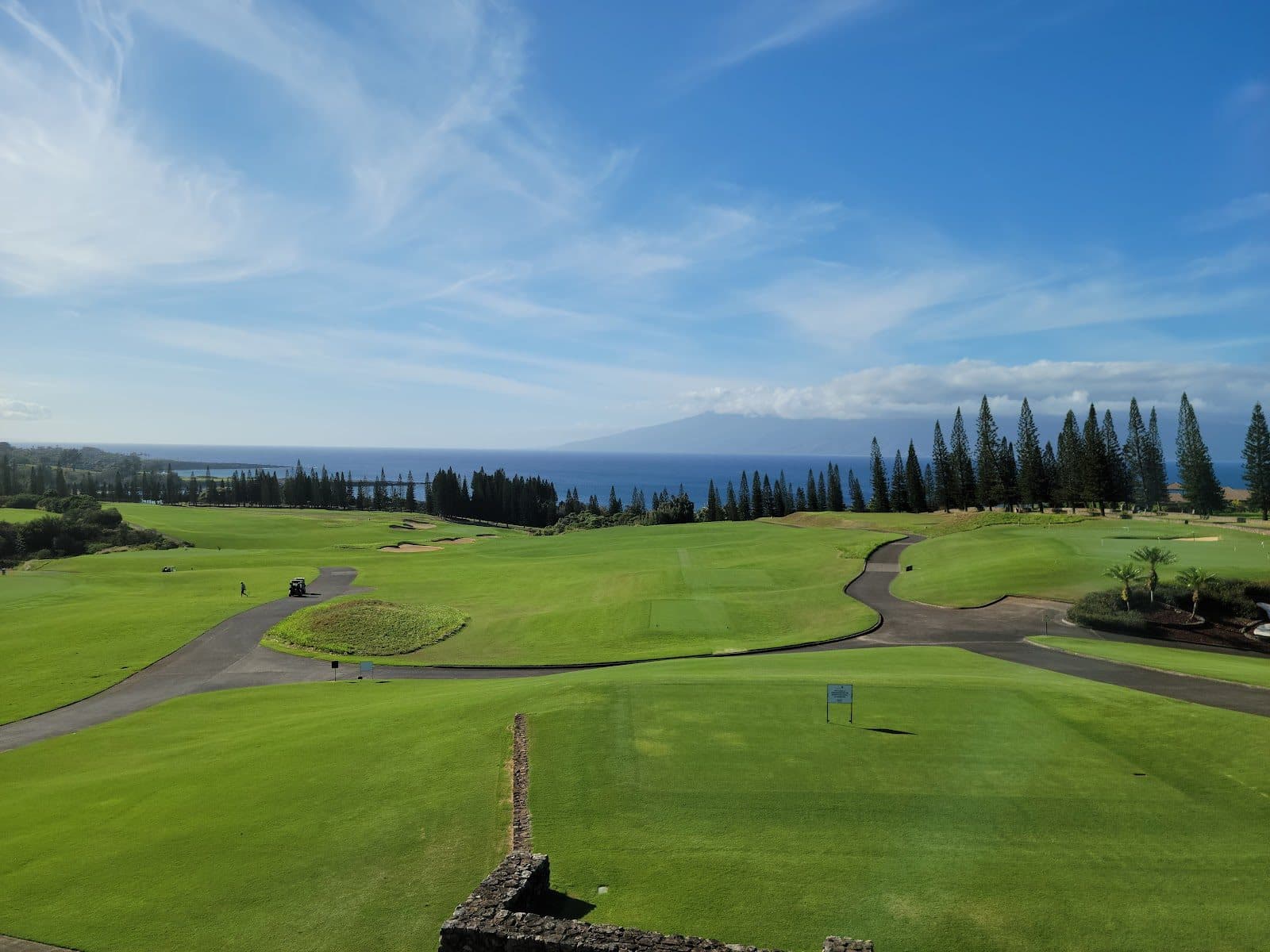
The Maui golf headline: Plantation brings tournament theatre, Wailea adds polish, and the island does the rest.
Hawaii
Kauai / Hawaii
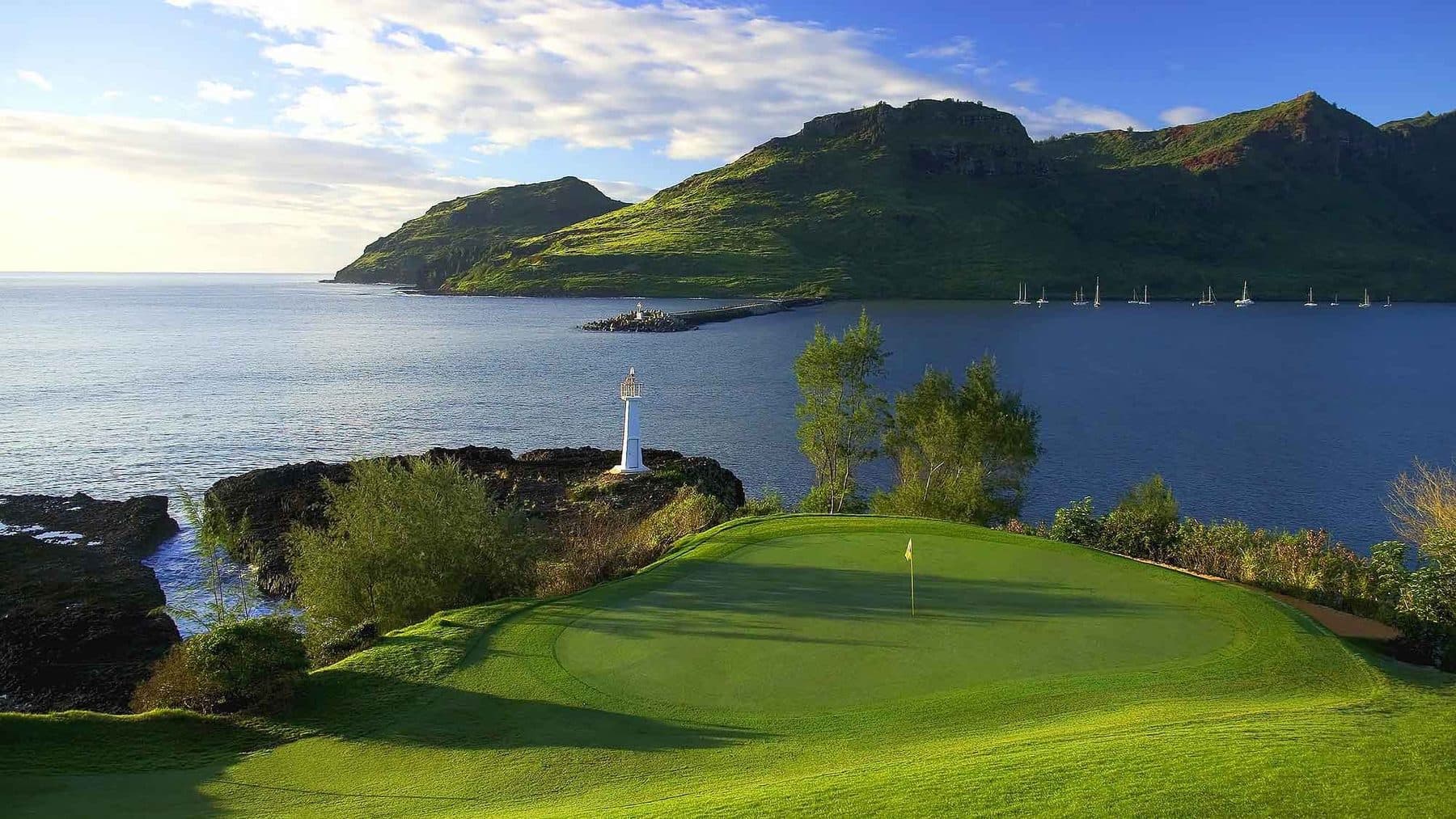
The Garden Isle version: Princeville Makai is the showpiece, Poipu and Hokuala add depth, and the scenery does not play fair.
Southeast
Sea Island / Georgia
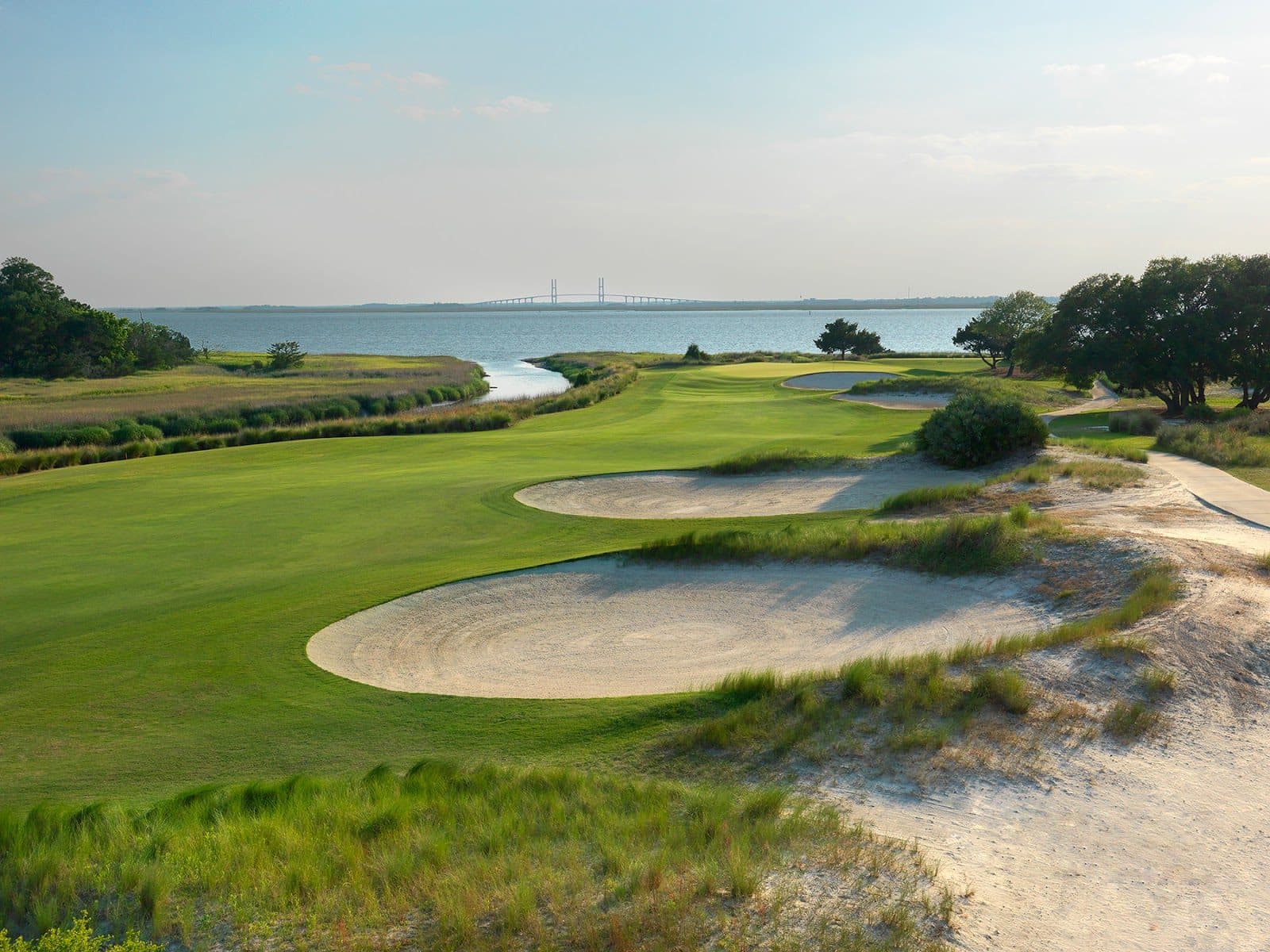
The polished Southern luxury golf trip: three resort courses, serious service, very good golf, and just enough restraint to avoid becoming a sales convention with better shoes.
Southeast
Lake Oconee / Georgia
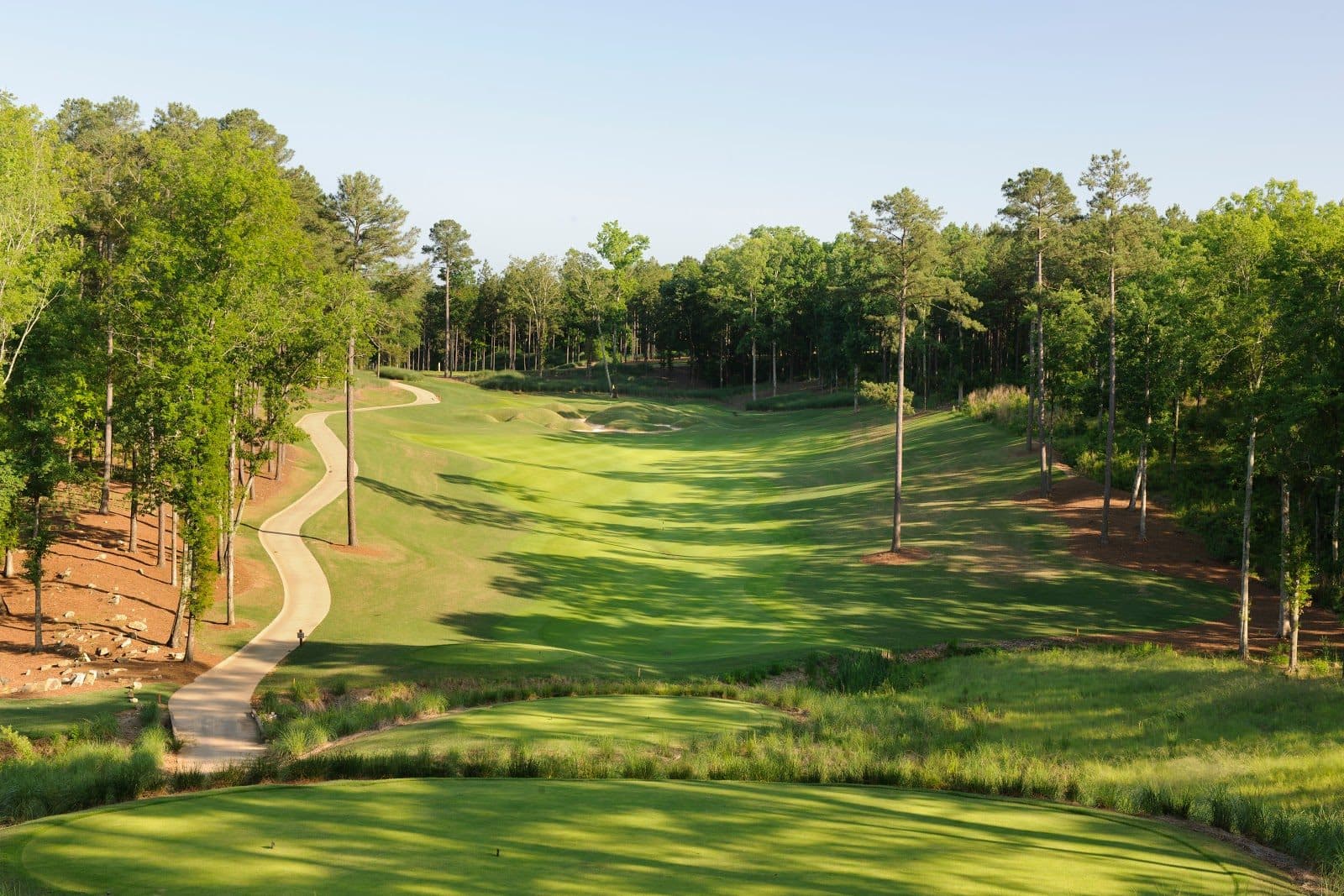
A lake-house golf trip with real depth: convenient for the Southeast, polished enough for couples, and better on the course list than casual golfers realize.
Southwest
Frisco / Texas
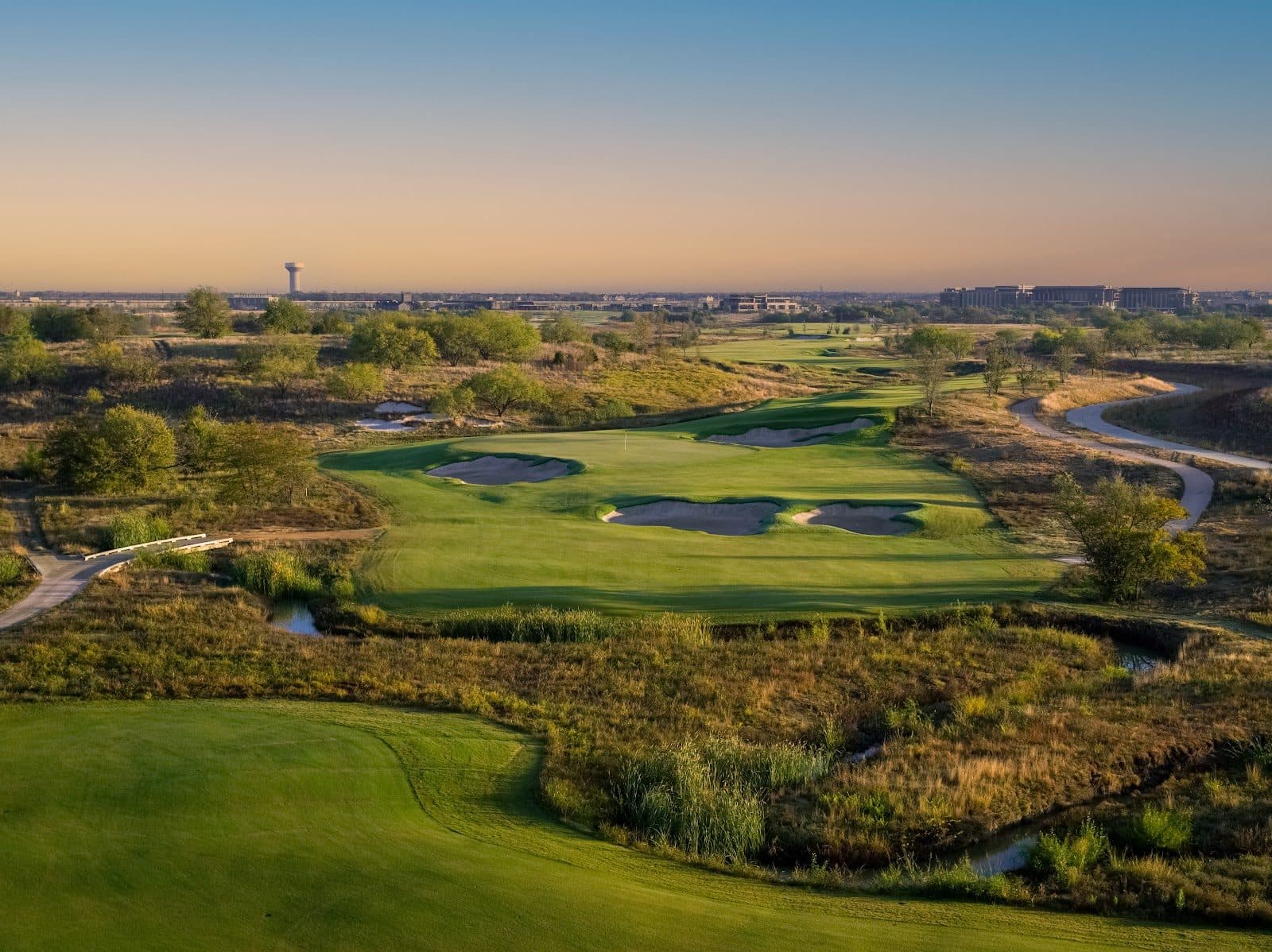
A new-school golf campus built for groups: easy flights, two big courses, short-course energy, and enough Dallas-area support to keep non-golf friction low.
Mountain
St. George / Utah & Nevada
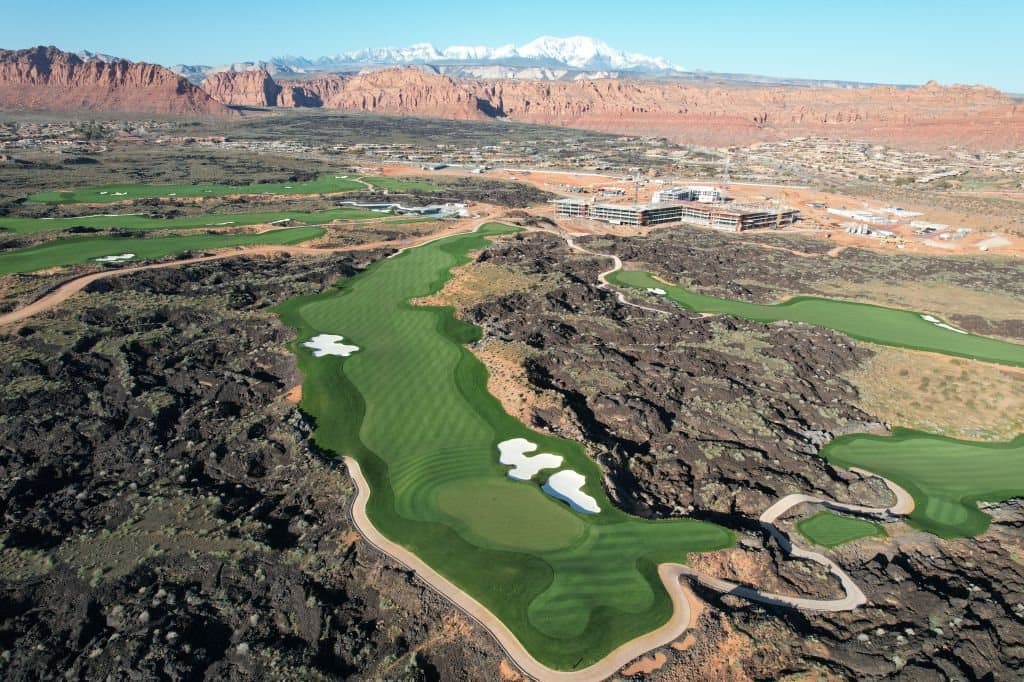
The red-rock desert golf trip with real teeth: Black Desert is the new headline, but Sand Hollow and Wolf Creek make the itinerary.
Canada - West
Banff & Jasper / Alberta CN
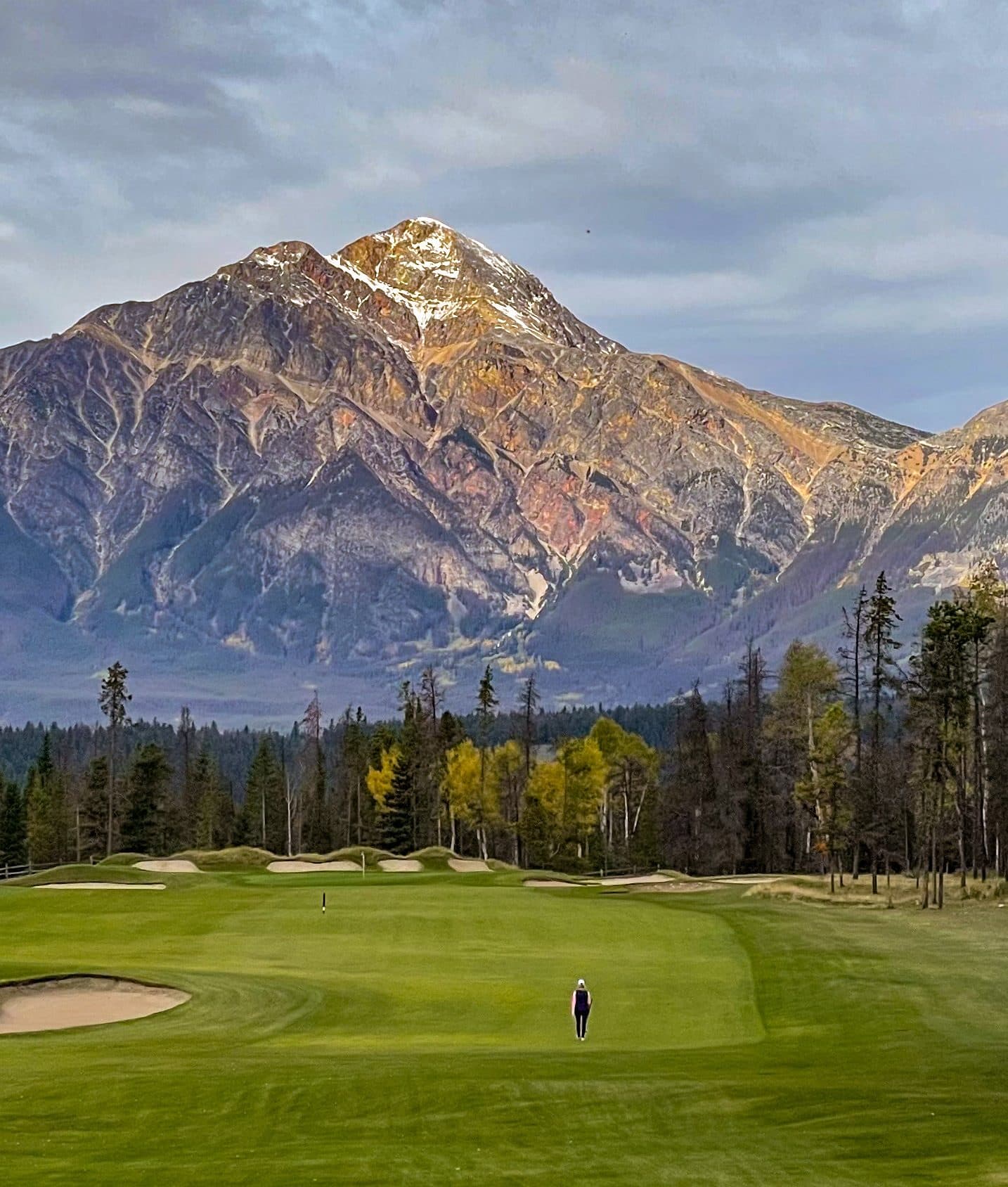
The mountain-scenery trip: Banff and Jasper are not volume plays; they are postcard golf with enough travel friction to make the payoff feel earned.
Southeast
Myrtle Beach / South Carolina
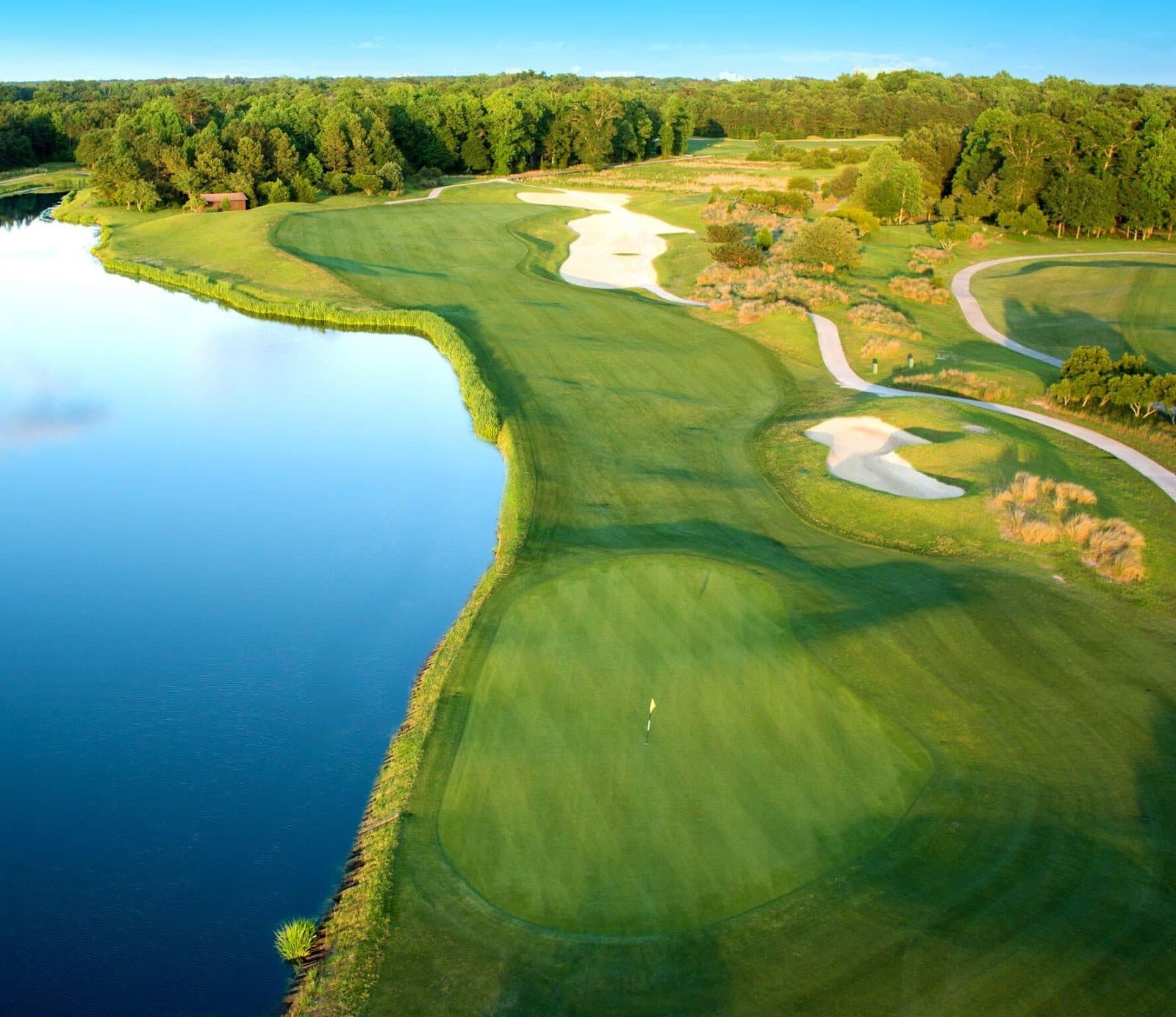
America's maximum-volume golf machine: huge choice, real value, some terrific courses, and enough mediocre filler to punish lazy planning.
Southeast
TPC Sawgrass Ponte Vedra / Florida
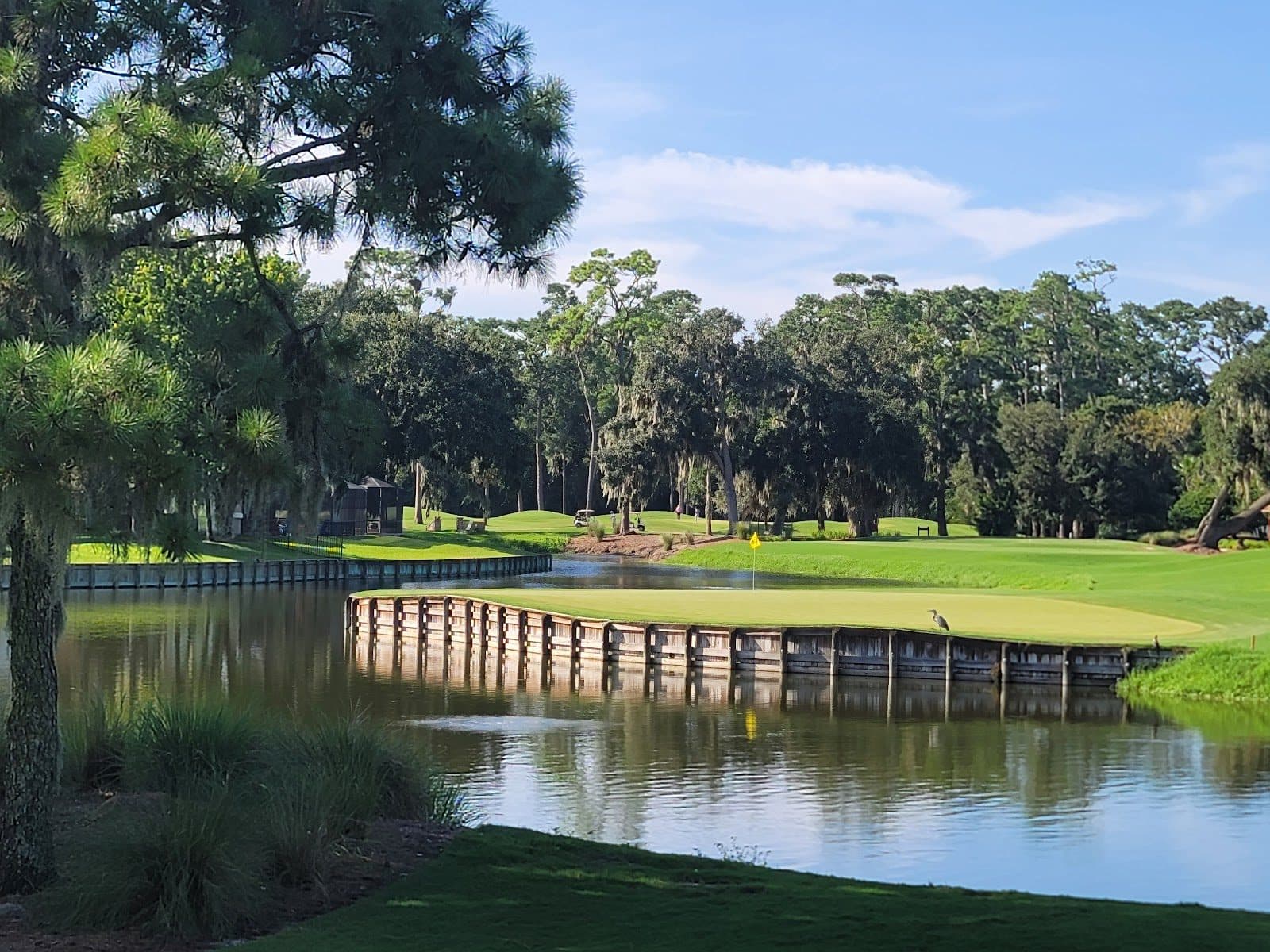
The Stadium Course is the headline, but the right trip uses Ponte Vedra as a tight, premium Florida golf weekend instead of a one-photo pilgrimage.
Mid-Atlantic
The Greenbrier & Virginia Highlands / West Virginia & Virginia
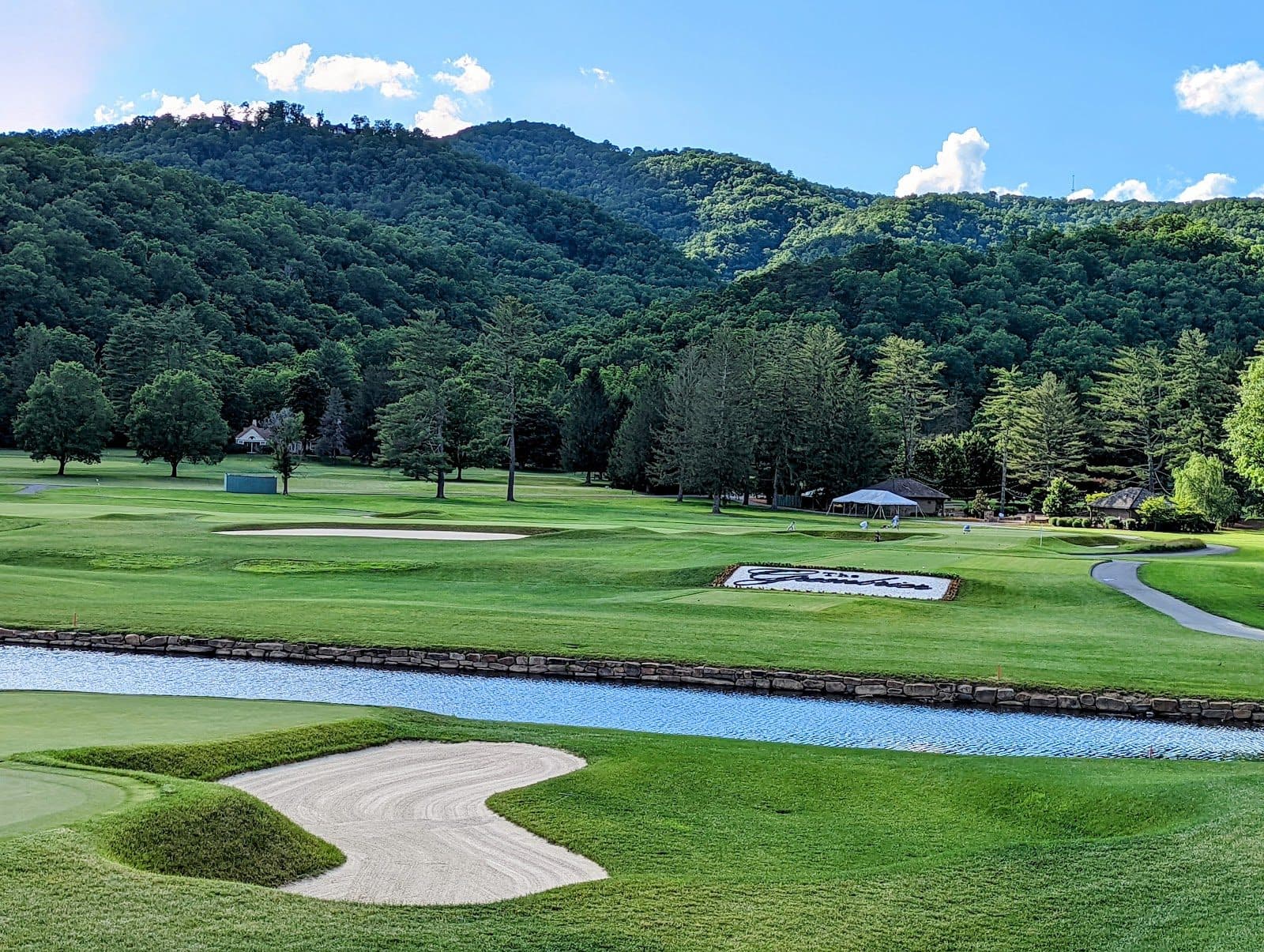
Classic resort golf with mountain air: historic, scenic, occasionally awkward logistically, and best for groups that like heritage more than nightlife.
Southeast
RTJ Trail / Alabama
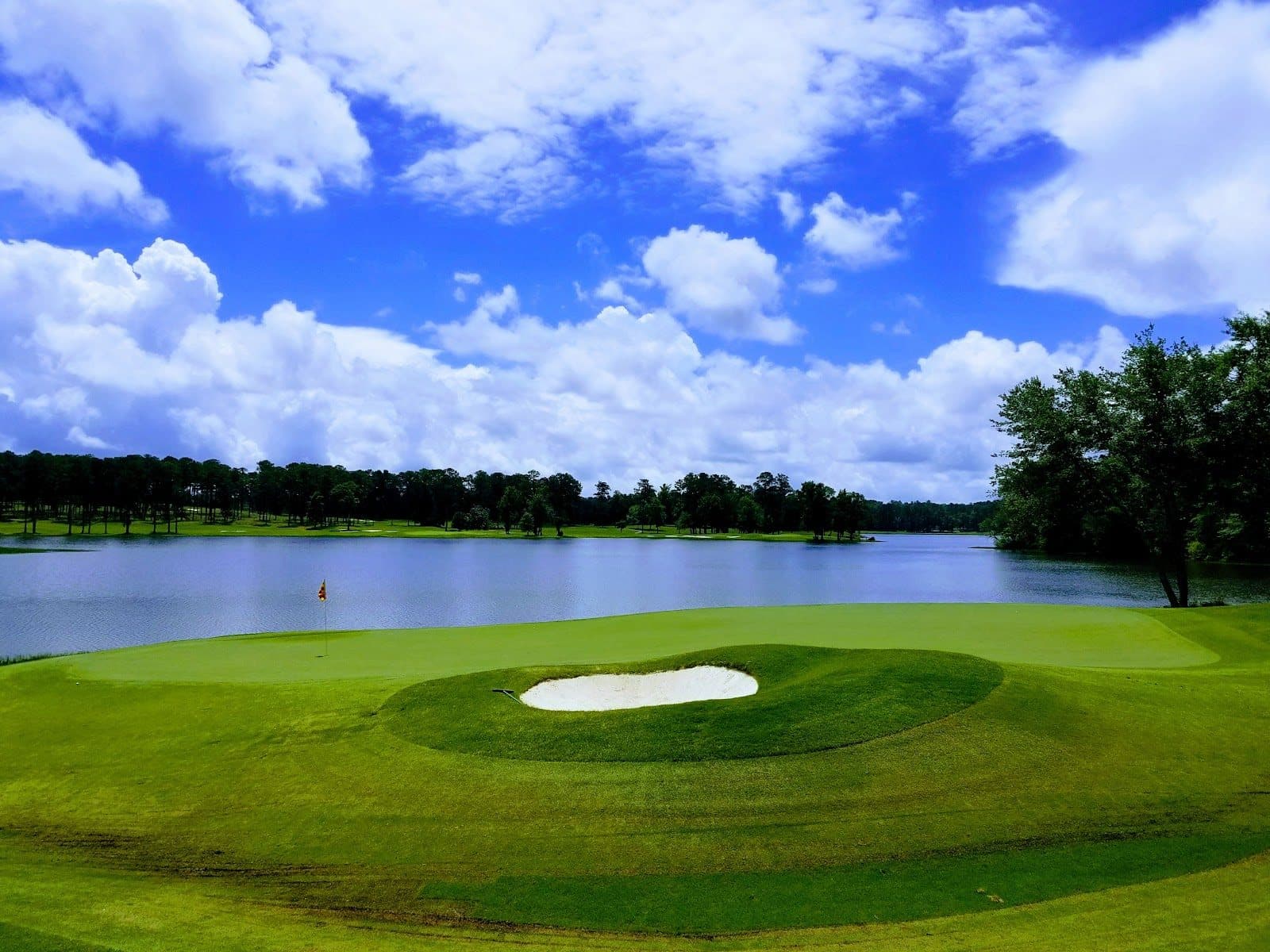
The value-and-volume play: big courses, huge property scale, strong replay math, and very little patience for groups obsessed with boutique resort glamour.
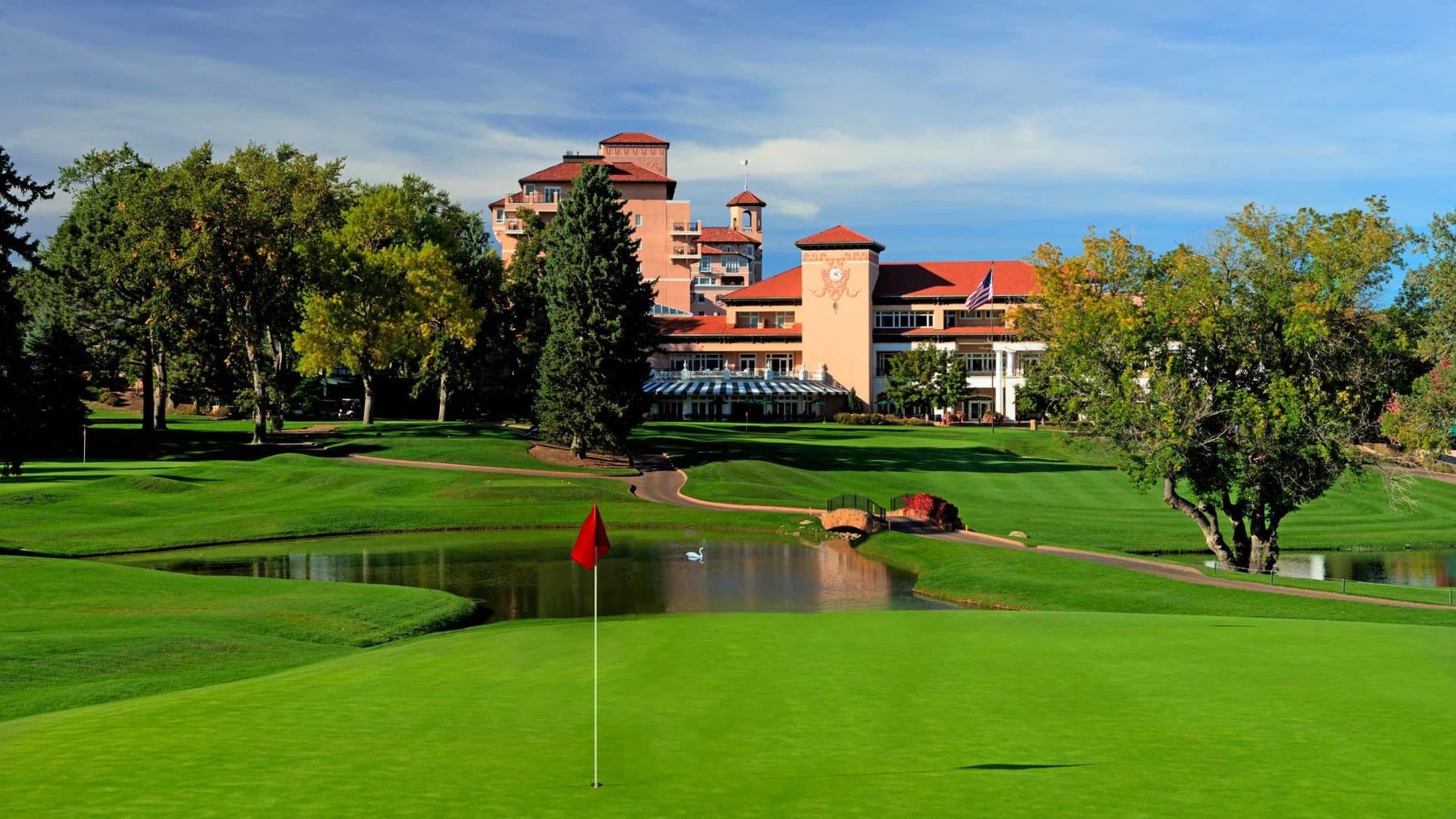
Mountain
Colorado Springs / Colorado
A classic mountain-resort golf trip: polished, scenic, altitude-affected, and best when the group values the hotel as much as the scorecard.
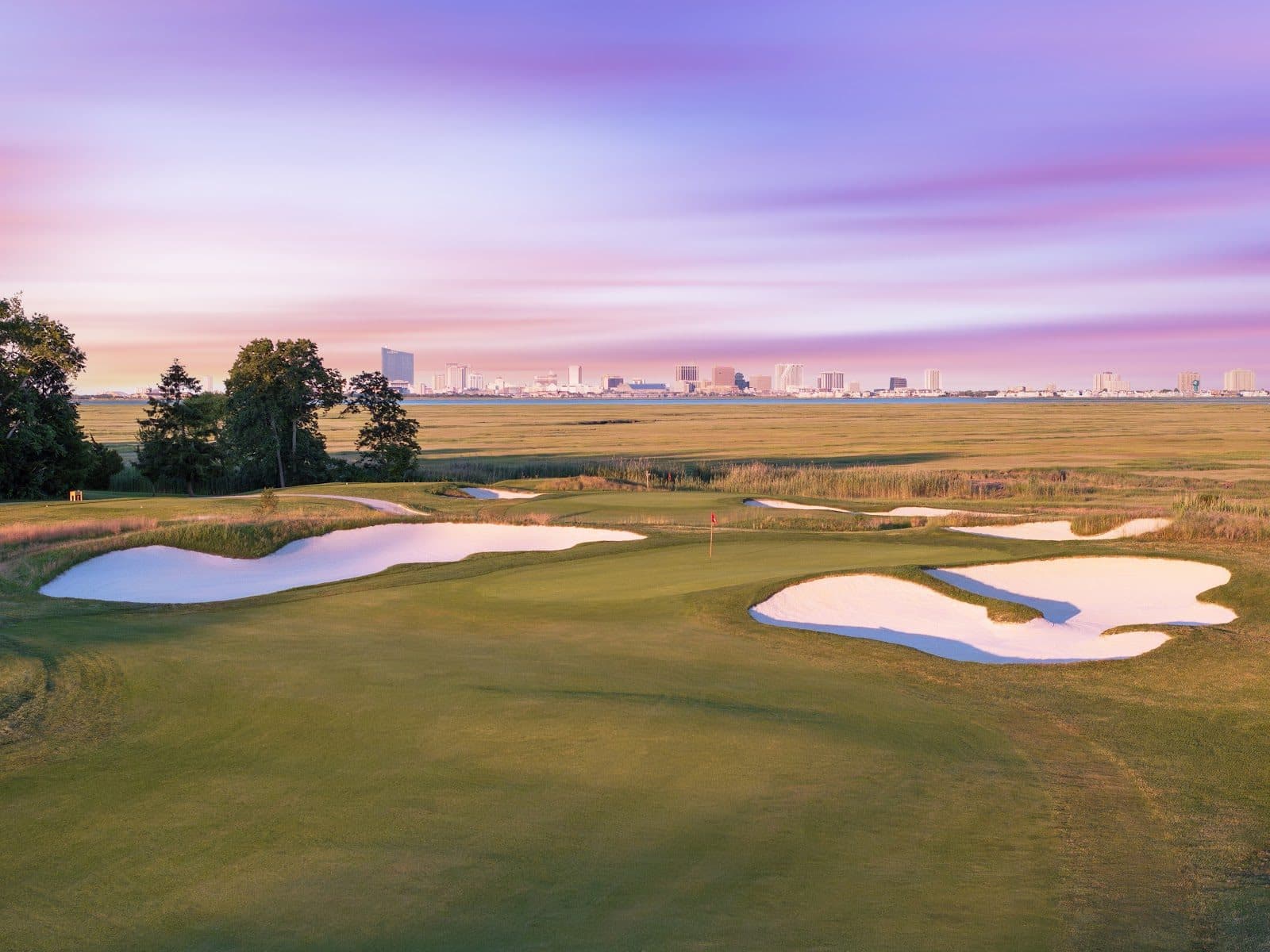
Northeast
Atlantic City / New Jersey
A scrappy Northeast buddies trip: good public golf, casino energy, beach-town convenience, and enough rough edges to keep it honest.
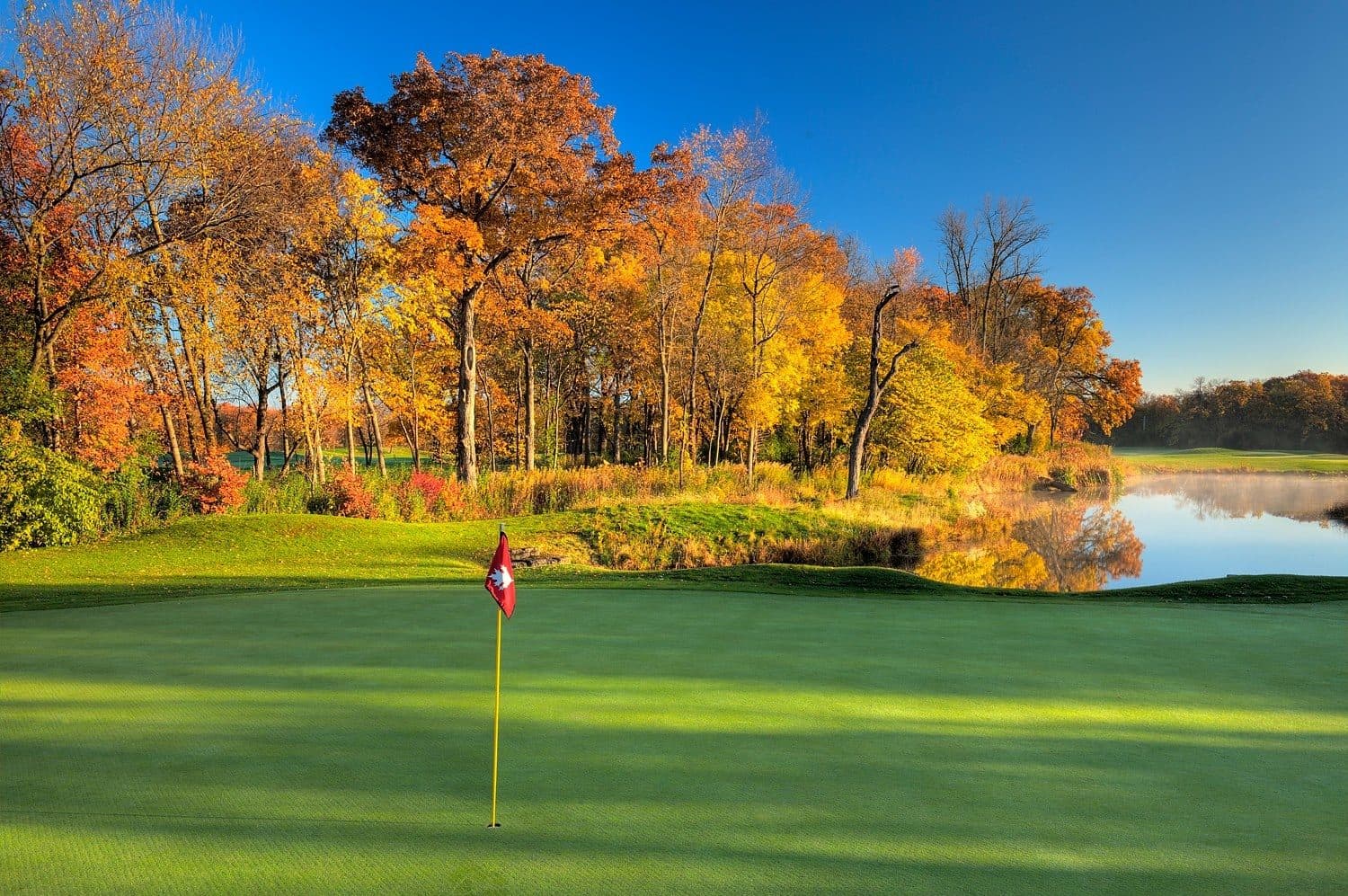
Midwest
Chicago / Illinois
A city golf trip with real course depth: not resort-simple, but strong for groups that want golf by day and Chicago by night.
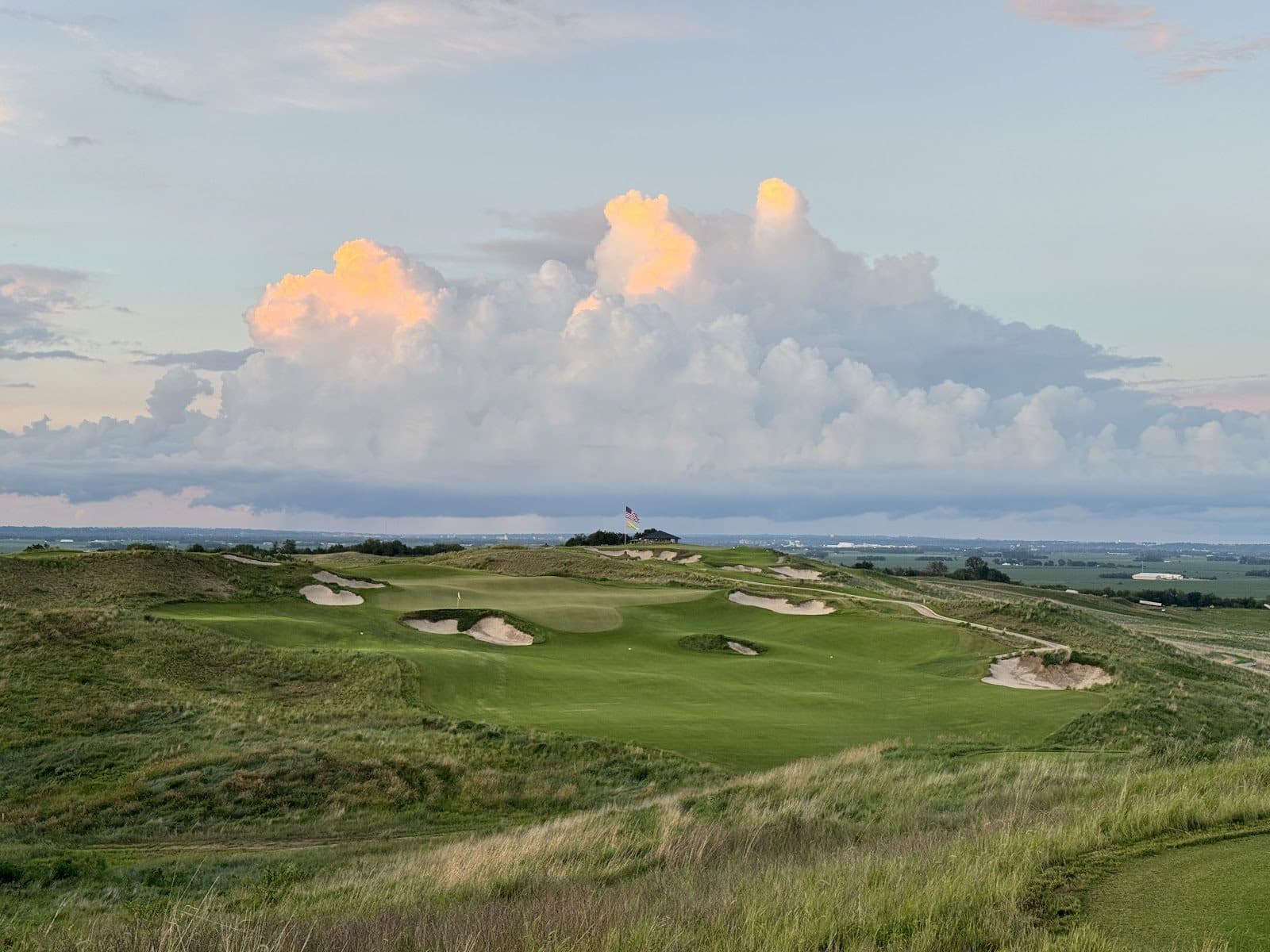
Midwest
Nebraska Sandhills
The architecture sicko pilgrimage: remote, raw, brilliant golf in a landscape that does not care about your nightlife needs.
Midwest
French Lick / Indiana
Two serious championship courses at one historic resort: Pete Dye brings the punishment, Donald Ross brings the soul.